


Hey there! As a supplier of Amikacin Sulfate Injection, I often get asked about the recommended duration of treatment with this antibiotic. In this blog, I'll break down everything you need to know about how long patients should typically take Amikacin Sulfate Injection, and why this matters.

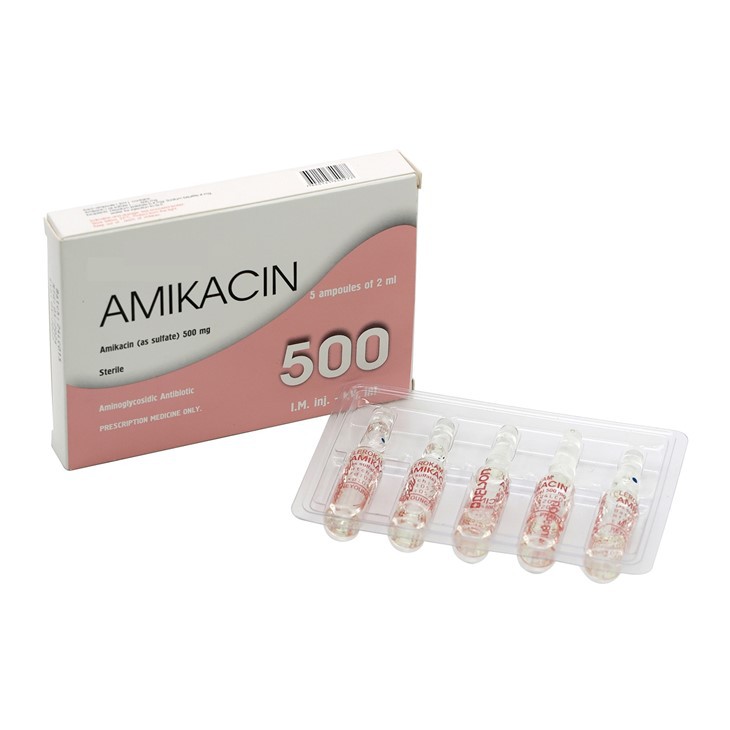
First off, let's understand what Amikacin Sulfate Injection is. It's a powerful aminoglycoside antibiotic that's used to treat a variety of serious bacterial infections. You can learn more about it on our website here: Amikacin Sulfate Injection. This medication works by stopping the growth of bacteria, which helps the body's immune system to fight off the infection more effectively.
The duration of treatment with Amikacin Sulfate Injection isn't one - size - fits - all. It depends on several factors, and we'll go through them one by one.
Factors Affecting Treatment Duration
Type of Infection
The kind of infection being treated is a major determinant. For example, if it's a less severe urinary tract infection caused by susceptible bacteria, the treatment might be relatively short. Usually, a course of 5 - 7 days could be sufficient in some cases. On the other hand, more serious infections like bloodstream infections or severe pneumonia may require a longer treatment period, often ranging from 10 - 14 days or even more.
Let's say a patient has a mild skin and soft - tissue infection. The doctor might start with a short - term treatment of Amikacin Sulfate Injection, maybe around 5 days, along with other appropriate therapies. But if the infection is deep - seated, such as an osteomyelitis (bone infection), the treatment could extend to several weeks. This is because it takes longer for the antibiotic to penetrate the bone tissue and completely eradicate the bacteria.
Bacterial Susceptibility
Not all bacteria are equally sensitive to Amikacin Sulfate Injection. Before starting the treatment, doctors usually perform a culture and sensitivity test. If the bacteria causing the infection are highly susceptible to the antibiotic, the treatment might be shorter. However, if the bacteria are only moderately susceptible, a longer course may be needed to ensure that the infection is fully cleared.
For instance, some strains of Pseudomonas aeruginosa, a common cause of hospital - acquired infections, can be quite resistant. In such cases, doctors may need to use Amikacin Sulfate Injection for a longer duration, sometimes up to 2 - 3 weeks, to make sure the bacteria are completely wiped out.
Patient's Overall Health
The patient's general health status also plays a crucial role. Patients with a weakened immune system, such as those with HIV/AIDS, cancer patients undergoing chemotherapy, or the elderly, may need a longer treatment. Their bodies are less able to fight off the infection on their own, so the antibiotic needs to work for a longer time to achieve the desired result.
A patient who has recently had major surgery is also at a higher risk of complications from an infection. In these cases, the doctor may choose to extend the treatment with Amikacin Sulfate Injection to prevent the infection from recurring.
Response to Treatment
The patient's response to the treatment is closely monitored. If the patient shows rapid improvement, with symptoms like fever, pain, and inflammation subsiding quickly, the doctor may decide to shorten the treatment course. Conversely, if there's little or no improvement after a few days, the doctor may need to re - evaluate the treatment plan. This could involve changing the dosage, the duration, or even switching to a different antibiotic.
General Guidelines
While the specific duration varies, here are some general guidelines that doctors often follow:
For most uncomplicated infections, a treatment period of 7 - 10 days is common. This includes infections like mild respiratory tract infections or uncomplicated skin infections.
In cases of more severe infections, such as sepsis (a life - threatening condition caused by the body's extreme response to an infection), the treatment usually starts with a loading dose, followed by a maintenance dose for 10 - 14 days or more. The doctor will monitor the patient's condition closely during this time, using blood tests and other diagnostic tools to assess the effectiveness of the treatment.
It's important to note that these are just general guidelines, and each patient's situation is unique. The doctor will consider all the factors mentioned above to determine the most appropriate treatment duration.
Comparison with Other Antibiotics
You might be wondering how Amikacin Sulfate Injection compares to other antibiotics in terms of treatment duration. Let's take Gentamycin Sulfate Injection as an example. Both are aminoglycoside antibiotics, but they have some differences.
Gentamycin Sulfate Injection is also used to treat a variety of bacterial infections. In general, the treatment duration for Gentamycin is similar to that of Amikacin Sulfate Injection for many infections. However, Gentamycin may have a higher risk of ototoxicity (hearing loss) and nephrotoxicity (kidney damage), especially with longer - term use. So, in some cases, doctors may prefer Amikacin Sulfate Injection, especially for longer - term treatments, because it may have a better safety profile in terms of these side effects.
Importance of Completing the Treatment
No matter how long the recommended treatment duration is, it's crucial for patients to complete the full course of Amikacin Sulfate Injection. Stopping the treatment prematurely can lead to the survival of some bacteria, which may then become resistant to the antibiotic. This can make future infections much harder to treat.
For example, if a patient starts feeling better after a few days of treatment and decides to stop taking the injection, the remaining bacteria may adapt and develop resistance. The next time the patient has an infection, Amikacin Sulfate Injection may no longer be effective.
Our Role as a Supplier
As a supplier of Amikacin Sulfate Injection, we understand the importance of providing high - quality products. We work closely with healthcare providers to ensure that the antibiotic is available when needed. Our product is manufactured under strict quality control standards to guarantee its efficacy and safety.
If you're a healthcare provider looking for a reliable source of Amikacin Sulfate Injection, or if you're involved in the procurement of medical supplies, we'd love to have a chat with you. We can discuss your specific needs, the quantity you require, and the best way to ensure a smooth supply chain.
Contact us to start a conversation about your Amikacin Sulfate Injection procurement needs. We're here to support you in providing the best possible care to your patients.
References
- Mandell, G. L., Bennett, J. E., & Dolin, R. (2015). Mandell, Douglas, and Bennett's Principles and Practice of Infectious Diseases. Elsevier.
- Sanford Guide to Antimicrobial Therapy. (2023). Antimicrobial Therapy, Inc.